
Local models.
Real-world awkwardness.
Getting a model to answer is the easy bit. Getting it to listen, respond promptly and transfer a call safely is where things get interesting.
A lab, not a promise.
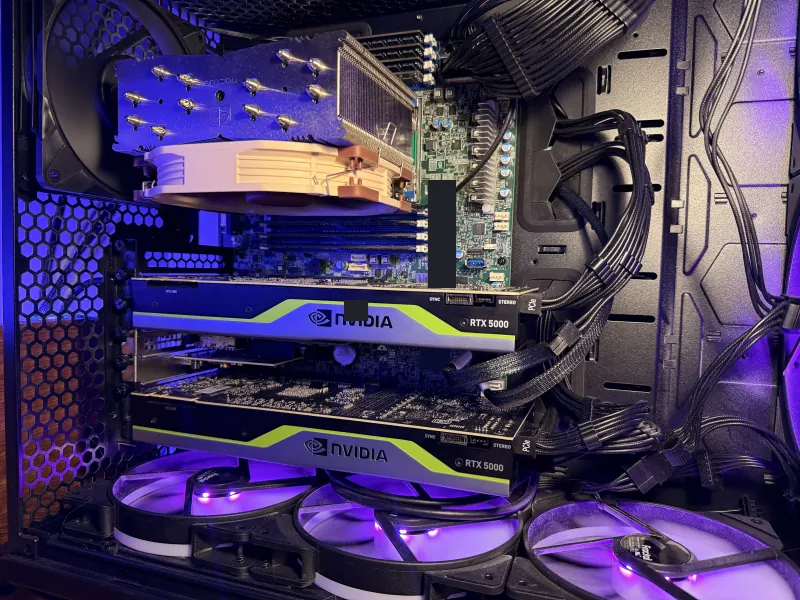
The current AI guest runs on the PowerEdge R740. The 18 October 2026 inventory exposed one Quadro RTX 5000 with 16 GiB VRAM to that guest.
The software environment includes local inference, a web interface, image workflows and speech services. A deployed component is not proof that every workflow has passed acceptance.
Speech is only half the problem.
- TELEPHONYPBX → incoming audio
- UNDERSTANDSpeech recognition → local language model
- RESPONDSpeech synthesis → caller audio
- TRANSFERSeparate, constrained transfer policy
Conceptual architecture. Operational addresses and configuration deliberately omitted.
RizoReception explores a local conversational receptionist: telephony, speech recognition, a language model and speech synthesis, with a separate policy controlling transfers.
Earlier transfer milestones and later voice changes have separate acceptance records. Automated checks do not replace listening to a real telephone call.
Read the receptionist case study ↗Inference
Model behaviour, latency and resource limits matter more than a large parameter count on a badge.
Speech
Audio quality, endpointing and interruption handling have to survive a real telephone path.
Boundaries
Private calls, destination lists and recordings stay private. A public project page is no excuse to expose them.